essay
The Two-Player Problem
2026-05-31 · 3 min read
Realistically, most of the games that actually get played in my house are two player games, because most nights it’s just me and whoever I’ve dragged into it that week, not some full table of five regulars showing up on schedule. That’s a completely normal situation and yet a shocking number of games I get excited about, on paper, quietly assume you’ve got four or five bodies to work with and just… don’t say so clearly on the box.
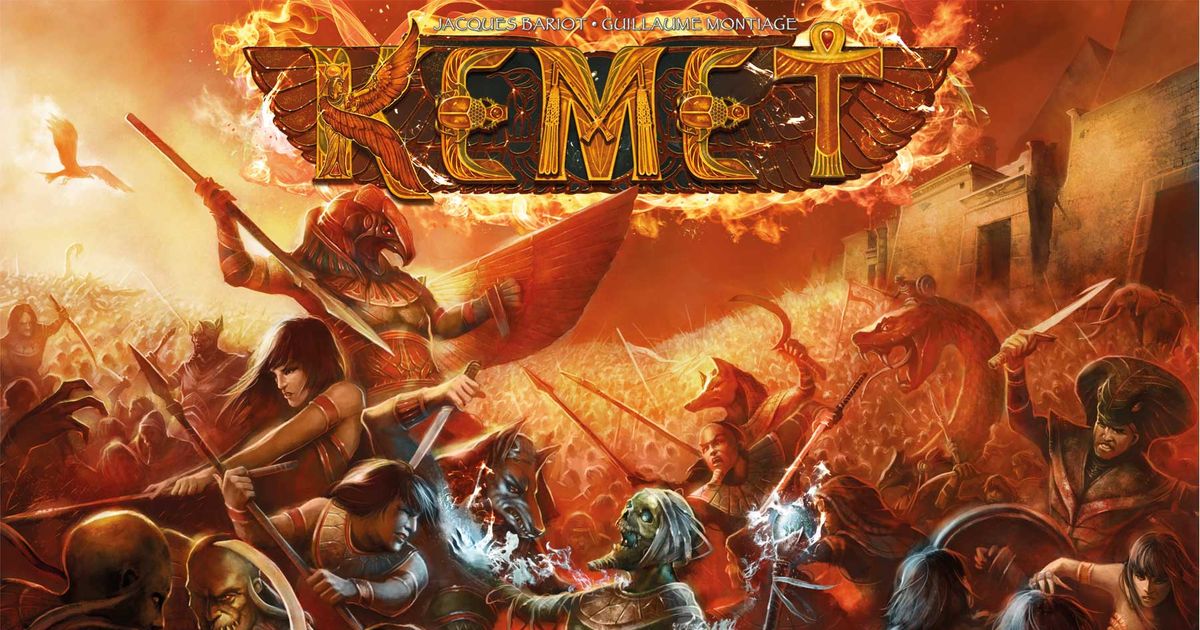
I’ve gotten a little annoying about this, I’ll admit it. I check player count scaling now before I check basically anything else, before theme, before complexity, before the art on the cover. Learned that lesson the hard way with Kemet, which I’ve already written about elsewhere, a game that’s genuinely a different and worse experience at two than at four or five, and nothing on that box warned me clearly enough that the two player mode was going to be the weak version.
What I’ve come to appreciate, and appreciate more the older I get into this hobby, is a game that was actually designed for two from the ground up instead of scaled down as an afterthought. Netrunner’s the obvious one, that’s not a four player game wearing a two player costume, it’s built for exactly two people and it shows in every part of the design, the asymmetry, the pacing, the way information hiding actually matters. That’s rarer than it should be. A lot of games treat two players as the minimum they’ll tolerate rather than a mode they actually built for.
I don’t think this makes me right about anything, plenty of people have full regular game nights and never think about this at all. But if you’re in the same boat I am, mostly two-player nights, do the homework before you buy. The box art won’t tell you. The scaling section buried in the rulebook usually will, if you’re willing to go looking for it before you’re already committed.
I’ve started actually keeping a mental short list, which is a very me way to handle this, of games that pass what I’d call the two player test versus games that technically support two but clearly think of it as a compromise mode you’re tolerating until you can round up more people. Netrunner’s on the first list, obviously. So is a specific abstract I picked up on a whim a couple years back that turned out to be built for exactly two from the ground up, no scaling rules at all because there was never a version of the game that wasn’t this. Kemet’s firmly on the second list now, and I’ll keep saying that until I’m tired of hearing myself say it.
I’ve gotten better, slowly, at reading between those lines before I buy instead of after. Checking whether the rulebook has a dedicated section for lower counts versus a single paragraph tacked on near the back that reads like an afterthought. Checking online for actual accounts of two player games instead of just the marketing copy. It’s more homework than I used to do, and it’s saved me from at least two purchases I’d probably regret by now.
None of this stops me from occasionally falling for a beautiful box with a theme I love and a player count range that quietly buries the truth in fine print. I fell for exactly that a few months back, actually, bought something gorgeous, got it to the table at two, and had a fine time, nothing terrible, just quietly forgettable in a way that told me everything about which list it belonged on. Lesson learned again. I’ll probably relearn it a third time eventually, knowing me.