book review · Manufacturing Consent
Manufacturing Consent
2026-06-10 · 3 min read
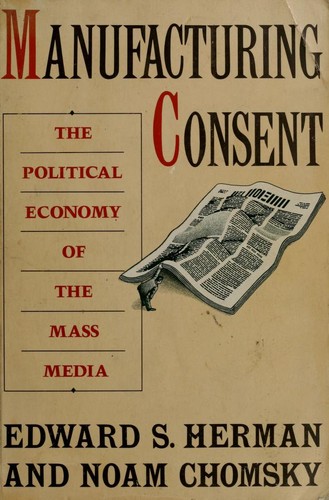
I went in expecting a polemic and got something closer to a methodology textbook, which surprised me. Herman and Chomsky lay out the propaganda model in the early chapters, five filters shaping what counts as news before a story ever reaches a reader, and then spend the rest of the book stress testing that model against specific case studies, mostly US media coverage of Central America, Vietnam, and Cambodia and Laos, set against the actual documented reality on the ground.
I’ll be honest, the middle stretch is a slog. The case study chapters are dense with comparative detail, column inch counts, timeline reconstructions, contrasting how differently the press covered similar atrocities depending on which side committed them, and I found myself putting the book down more than once in that section. I know I’m not alone in that, it’s the kind of book people describe finishing the introduction and conclusion cleanly and admitting the middle took real discipline to get through. The thesis is clear from the first hundred pages though, and the rest is essentially watching that thesis play out in exhaustive, evidence-heavy detail, which matters if you need the receipts but drags if you already believe the argument.
What’s stuck with me longest isn’t even the specific case studies, it’s the prose style itself, this dry, almost deadpan delivery of genuinely disturbing material, which reads as its own kind of quiet satire. I’ve seen other readers describe it as the most disturbing book they’ve read, and I understand that reaction even though my own read was less visceral, more of a slow-building unease that took a few weeks to settle after I finished.
Dense, occasionally a grind, essential anyway. This changed how I read a headline, permanently, and not many books actually do that.