book review · Permutation City
Permutation City
2026-06-07 · 3 min read
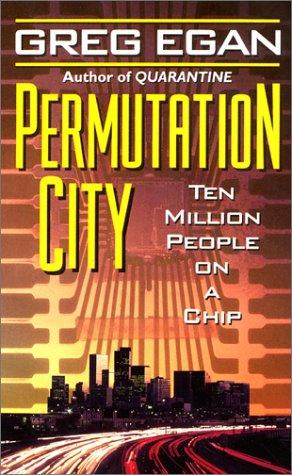
This is my second Egan after Quarantine, and both books follow a similar shape, an ordinary-ish protagonist runs into people with strange metaphysical claims about how reality actually works, stays skeptical, then gets forced to reckon with them once the evidence stops being deniable. It’s a good template and Egan’s one of the few writers I trust to actually follow the science all the way down instead of hand-waving past the hard part.
The core concept here, Copies, digital scans of people running as simulations with real legal and ethical standing, is handled with a rigor I haven’t seen matched elsewhere. Egan’s not interested in the easy version of this idea, he wants to know what happens to identity and continuity when a Copy can be run slower, faster, paused, forked. The middle stretch leans hard into exposition to get all of that machinery built out for the reader, and I won’t pretend it’s a fast read, I actually set it down partway through and read Quarantine instead before coming back to finish it.
Where it earns real respect from me is Dust Theory, the idea underpinning the back half of the book, which I’m not going to explain here because it’s better encountered fresh. It’s the kind of concept that either fully lands for you or feels like a rug pull, and I’ve seen readers split cleanly down that line. I landed on the side that it takes no prisoners, in the best way, willing to follow its own logic somewhere genuinely uncomfortable rather than softening the ending to be more palatable.
Not an easy recommendation. If hard SF that actually shows its work appeals to you more than smooth characters and a tidy plot, this is close to essential.